
Ageing Renewable Assets: When Obsolescence Becomes a Claims Challenge
An interview with Ross Montagne, Loss Adjuster, Green Partners Adjusting
Europe’s first generation of renewable energy assets is entering a new phase of its operational life. Wind farms commissioned twenty years ago continue to generate attractive revenues, while early solar installations remain commercially valuable long after their original design life. Yet as these projects age, insurers are increasingly being asked to respond to claims involving equipment that is no longer manufactured, original suppliers who no longer provide support, and technologies that have evolved far beyond the systems originally installed.
At first glance, these appear to be engineering challenges. In reality, they are often insurance challenges just as much as technical ones. Determining whether equipment is genuinely obsolete requires adjusters to balance policy wording, engineering practicality, contractual obligations and the commercial realities of keeping an ageing renewable energy project operational.
Ross Montagne, Loss Adjuster at Green Partners Adjusting, explains why obsolescence is becoming a growing consideration in renewable energy claims, and why these losses are rarely as straightforward as they first appear.
When people talk about obsolete equipment, Ross, what does that actually mean from a claims perspective?
One of the first things I’ve found is that there often isn’t a universally accepted definition.
People naturally assume that policies will define what constitutes obsolete equipment, but in practice many renewable energy insurance policies don’t even contain an Obsolete Technology Clause (OTC). Even where they do, the wording often refers to equipment becoming “obsolete” or “uneconomic” without actually defining what those terms mean. That leaves considerable room for interpretation when a claim occurs.
The difficulty is that everyone involved in a claim can arrive with a different understanding of what obsolete actually means. An insured may regard a component as obsolete because replacement parts are no longer readily available through the original manufacturer. An insurer may focus instead on whether the equipment can still be repaired or replaced by another route. Neither position is necessarily wrong, but they can lead to very different conclusions.
Now, in practical terms, almost anything is repairable if enough time and money are available. The more important question is whether repair remains the most appropriate solution once the wider commercial picture is considered. That’s where these claims become considerably more nuanced than a simple engineering assessment.
Why is this becoming a more significant issue for renewable energy insurers now?
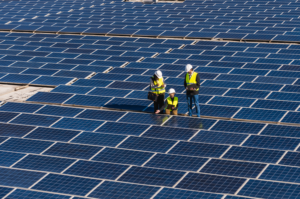
The first generation of utility-scale wind farms and solar projects was built using technology that, in many cases, is no longer supported by manufacturers. Components disappear from production, suppliers are acquired or leave the market, and replacement equipment often bears little resemblance to the systems originally installed. A typical example may be an older 200watt photovoltaic solar panel versus the newer 500watt panels now available.
At the same time, owners are increasingly looking to extend the operational life of existing assets rather than repowering or replacing them outright.
Interestingly, these older projects are often some of the most commercially valuable assets in a portfolio. Many continue to benefit from legacy support mechanisms such as Renewable Obligation Certificates or Feed-in Tariffs, while occupying some of the strongest wind resource locations secured during the industry’s earliest development. Similarly, the original capital investment has likely long since been recovered, meaning the project continues to generate attractive returns. Furthermore, planning restrictions may preclude installing larger more modern wind turbines at the site.
That creates an interesting tension during claims. The equipment may be ageing, but the value of keeping the project operational has rarely been greater. Looking only at the age or depreciated value of a component rarely tells the full story when considering the interests of insured project owners and investors.
So how does that scenario influence the way you approach a claim?
Well, we always try to step back and look beyond the damaged component itself.
It’s easy to become focused on a failed gearbox, transformer or inverter, but the real question is what role that piece of equipment plays within the wider project. If replacing it quickly allows an asset to continue generating substantial revenue for another decade, the commercial value of that decision may be significantly greater than simply considering the replacement cost of the equipment itself.
That’s why we don’t see obsolescence as simply about whether something can be repaired or replaced. It’s about understanding the engineering, commercial and contractual consequences of every available option. Sometimes repairing an older component represents the best outcome. In other cases, replacement – or even project re-design in the case of solar – may ultimately prove more appropriate.
And we can’t make those decisions by just looking at the physical damage in isolation.
In that case, how important are contractual arrangements in those decisions?
They’re fundamental, really.
When we assess a renewable energy claim, we’re not just looking at the damaged asset. We’re also looking at the contractual framework surrounding the project, because that can have a significant influence on where financial responsibility ultimately sits.
Modern renewable energy projects are commonly supported by comprehensive Operations and Maintenance agreements, manufacturer warranties and availability guarantees. Those contractual protections can reduce the financial impact of an outage because some of the operational risk remains with the contractor or equipment manufacturer. Liquidated Damages or availability payments may also compensate the project owner if contractual availability standards are not achieved.
As projects age, however, many of those protections begin to disappear. Full-service maintenance agreements may be replaced by scheduled maintenance-only contracts, availability guarantees expire, manufacturers stop supporting legacy equipment, and opportunities to recover losses contractually become more limited. The result is that insurers may ultimately find themselves carrying a greater proportion of the Business Interruption exposure because there are simply fewer alternative avenues for recovery.
That’s why these claims can’t be viewed purely as Property Damage claims. Understanding how Business Interruption, contractual liabilities and engineering decisions interact is often just as important as understanding the physical failure itself.
Can you give an example of the practical challenges that creates?
One example involved an ageing wind turbine where a major mechanical component had failed after the original manufacturer had withdrawn support for that generation of equipment.
At first sight the solution appeared straightforward because a refurbished replacement component could still be sourced through the secondary market. However, once we looked more closely, the decision became much less straightforward.
The replacement component carried only a limited warranty and its operating history was uncertain. Installing it would require another major crane mobilisation, significant downtime and considerable expense. If that refurbished component failed again within a relatively short period, the project could find itself facing another prolonged outage, another expensive crane campaign and further Business Interruption losses.
In that case, the real question was whether a repair represented the most robust commercial outcome for everyone involved. Those are exactly the kinds of decisions that adjusters are increasingly being asked to consider as renewable assets continue to age; but within the framework of the insurance policy, and specifically the settlement provisions of the policy and any OTC clauses.
Does the second-hand market solve many of these problems?
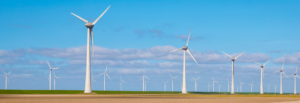
In a lot of cases, yes. As more renewable assets are repowered, an increasing inventory of refurbished components becomes available. So, where manufacturers have stopped producing equipment, particularly for older wind turbines, that enables much more creative and cost-effective solutions to be considered.
However, simply because a replacement component exists doesn’t automatically make it the right answer.
A refurbished blade, gearbox or generator may have a relatively limited warranty, an uncertain operating history or a shorter remaining service life than a new component. Installing it may also involve significant crane mobilisation costs and prolonged outages that need to be weighed against the long-term reliability of the repair.
From our perspective, the question isn’t simply whether a second-hand component is available. It’s whether fitting that component represents the most appropriate long-term outcome for the project, taking into account operational risk, future maintenance requirements and the potential consequences of another failure. Sometimes refurbishment represents an excellent solution. Equally, there are situations where it may simply defer a larger problem.
Again, those decisions rely on balancing engineering judgement with commercial reality rather than applying a single rule. At Green Partners, we would frame all of this within the lens of the insurance policy scope available, and what added constraints this puts on the process.
Is solar presenting different challenges to wind?
Yes, very much so. Although the underlying issue is still obsolescence, the practical challenges often look quite different.
Wind turbines tend to involve large mechanical components where sourcing replacement equipment becomes increasingly difficult over time. In solar, technology evolves so rapidly that compatibility can become the bigger issue. Even where replacement equipment remains readily available, it may no longer integrate with the existing installation.
We’ve seen situations where replacing damaged photovoltaic modules isn’t simply a case of ordering new panels. Modern modules may have different physical dimensions, different electrical characteristics and different mounting arrangements, making them incompatible with the original racking system. Similarly, inverter technology has advanced significantly over the past decade, and failures within older platforms can become disproportionately complex where electronic control boards or proprietary components are no longer manufactured.
In some cases, a relatively inexpensive electronic failure can ultimately require replacement of an entire inverter because compatible replacement parts simply don’t exist. Introducing newer technology into an older installation can also create wider engineering considerations around system compatibility, electrical performance and long-term reliability.
Those are the kinds of technical assessments that increasingly sit alongside the insurance aspects of a claim.
Looking ahead, how do you see these issues developing over the next decade?
I think they’ll become considerably more common.
Europe’s renewable energy sector is now moving beyond its rapid construction phase and into long-term asset management. That’s a positive reflection of the industry’s growth, but it also means insurers will increasingly encounter claims involving ageing equipment, discontinued technologies and infrastructure that has already exceeded its original design life. That said,it is worth highlighting that we believe that the quality of Asset Management and proactive maintenance has significantly improved over the last decade, increasing in experience and becoming much more comprehensive.
However, overall, owners are looking to maximise the value of existing assets rather than replacing them prematurely. Where projects continue to generate strong revenues—particularly those benefiting from legacy subsidy arrangements or excellent operating performance with high levels of availability —the commercial incentive to keep those assets running remains significant.
As a result, I think claims will increasingly require adjusters to understand much more than the damaged equipment itself. Engineering remains fundamental, but so too do policy wording, contractual recovery opportunities, Business Interruption exposure and the wider economics of the project. The interaction between those different factors is often what determines the most appropriate claims outcome.
What should insurers take away from that?
Perhaps the biggest misconception is that obsolescence is simply a technical issue.
In reality, determining whether equipment is genuinely obsolete rarely comes down to a single engineering decision. Every claim has its own combination of technical, contractual and commercial considerations, and understanding how those factors interact – balanced with how appropriate the insurance contract in place actually is – is often what leads to the best outcome for everyone involved.
An ageing gearbox, an unsupported inverter or an obsolete control system may all appear to present the same problem on paper. But in practice, however, the right solution depends on the wider context of the project, the available contractual protections, the long-term operational objectives of the insured and the practical realities of returning the asset to service.
Ultimately, that’s where specialist renewable energy adjusting adds value. It’s not simply about deciding whether equipment can be repaired or replaced. It’s about understanding the project as a whole and identifying the solution that best reflects the engineering, the policy in place and the commercial realities of the claim.
As Europe’s renewable energy fleet continues to mature, those judgements will only become more important.
– Ends –
About Green Partners Adjusting
Green Partners Adjusting is a dedicated loss adjusting firm specialising exclusively in renewable energy claims. With a global presence and deep sectoral expertise, the firm supports both high-volume and high-value claims ranging from £50,000 to over £25 million across wind, solar, BESS, and all forms of renewable energy power generation, as well as offering specialist risk surveys including Maximum Foreseeable Loss/Probable Maximum Loss modelling on renewable energy assets.
The team brings technical and contractual fluency to complex losses, ranging from WTG blade and gearbox failures, energy storage incidents, to component-level system faults, underpinned by data-led forecasting and asset class familiarity.
Green Partners Adjusting delivers bespoke reporting and commercially focused insight to claims teams, navigating local jurisdictional challenges, subsidy regimes, and the logistics of part sourcing and replacement.
The team includes ACII-qualified professionals, GWO-certified adjusters, forensic accountants, and multi-lingual specialists, ensuring responsive, informed claims resolution anywhere in the world.
Green Partners Adjusting is a part of the vrs Vering global loss adjusting network.